



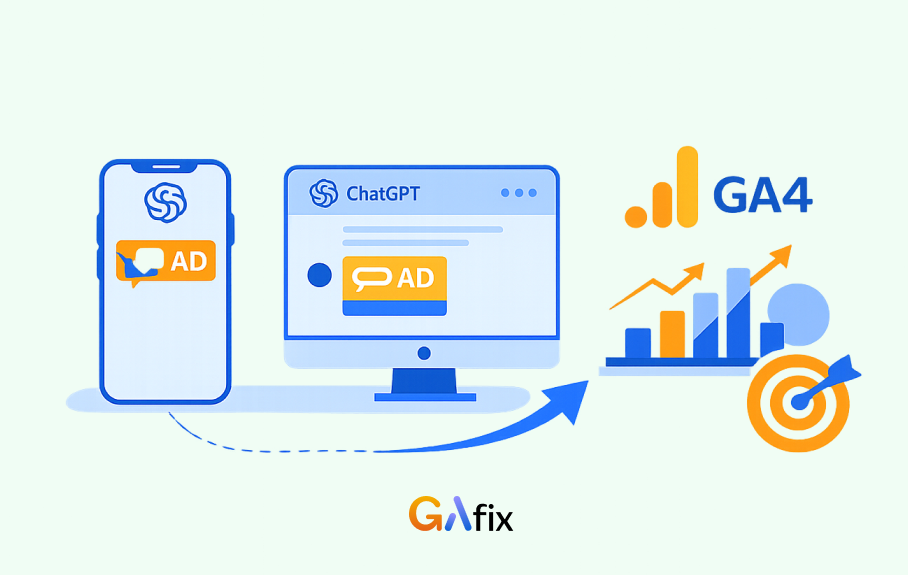



OpenAI has begun testing ads inside ChatGPT, marking one of the most significant monetization shifts in the AI era. For digital marketers, this isn’t just another ad placement — it’s the arrival of conversational AI advertising at scale.
More importantly, the move introduces new complexity for ChatGPT ads GA4 tracking, attribution modeling, and referral analytics. As AI becomes a discovery engine, marketing measurement must evolve alongside it.
Here’s what’s confirmed — and what it means for your analytics strategy in 2026.
OpenAI Tests Ads in ChatGPT: What’s Confirmed
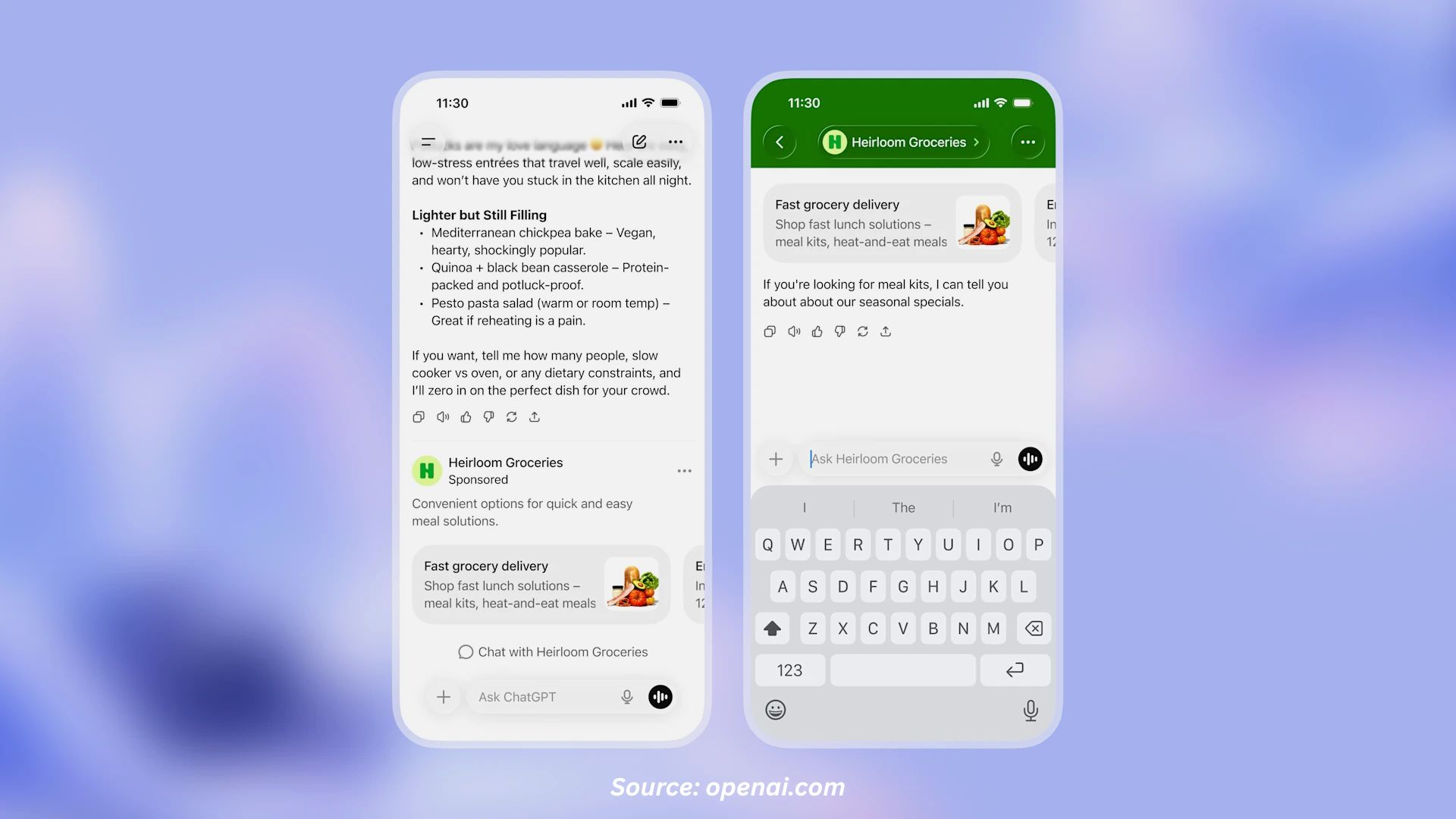
OpenAI has officially confirmed it is testing advertising inside ChatGPT for users on its Free and Go ($8/month) plans in the United States. Paid tiers — including Plus, Pro, Business, and Enterprise — remain ad-free.
According to the OpenAI newsroom, the company is exploring advertising as part of a broader monetization roadmap alongside subscriptions and enterprise offerings.
ChatGPT already serves over 100 million weekly active users globally, making it one of the fastest-growing consumer platforms in history.
Important: No Self-Serve Platform (Yet)
Unlike Google Ads or Meta Ads, there is currently:
- No public self-serve dashboard
- No open sign-up process
- No automated campaign builder
Access is invitation-only. OpenAI is reportedly working directly with selected brands in an early beta program rather than allowing open advertiser participation.
This makes ChatGPT ads, for now, a controlled pilot — not a scalable performance channel for most marketers.
High Barrier to Entry: $200,000+ Minimum Commitment
Multiple marketing industry reports indicate that OpenAI is requiring a minimum commitment of approximately $200,000 to participate in the early beta.
That immediately positions ChatGPT advertising as:
- Enterprise-focused
- Brand-heavy
- Not yet accessible to SMBs
In addition, early pricing is reportedly based on a CPM model (~$60 per 1,000 impressions) rather than CPC or keyword bidding.
This differs sharply from performance-driven platforms like:
- Google Ads (CPC + Smart Bidding)
- Meta Ads (Auction-based CPC/CPA)
There is currently:
- No advanced self-serve conversion tracking
- No automated bidding system
- No advertiser-facing real-time reporting dashboard
That matters for attribution — because tracking sophistication lags platform ambition.
How ChatGPT Ads Differ From Search and Social
ChatGPT ads operate inside a conversational interface powered by natural language understanding.
Instead of targeting:
- Search keywords
- Social behaviors
- Demographic segments
Ads are triggered contextually within live conversations.
This changes the discovery journey.
According to the Google Analytics documentation, GA4 attribution depends on identifiable traffic sources and preserved campaign parameters.
Conversational AI complicates both.
The Immediate Impact on GA4 Tracking
As ChatGPT ads drive outbound clicks, marketers will begin seeing new referral patterns inside GA4.
But there are structural tracking challenges.
1. Referral Inconsistency
AI-generated links may:
- Modify referrer headers
- Obscure campaign parameters
- Route traffic unpredictably
This increases the risk of traffic being classified as “Direct.”
2. UTM Parameter Fragility
UTMs assume static URL distribution. In conversational environments, links may be dynamically generated or reformatted.
If UTM parameters aren’t preserved perfectly, attribution degrades.
According to Google Analytics documentation, campaign accuracy depends on intact tagging structures.
3. Rise of “Dark AI Traffic”
Dark traffic — visits without clear source data — has historically affected email and messaging platforms.
AI-driven traffic may expand this blind spot significantly.
As conversational interfaces become discovery layers, attribution opacity increases.
Why Traditional Attribution Models Will Struggle
Most organizations still rely on:
- Last-click attribution
- First-click models
- Linear attribution
Conversational AI introduces nonlinear journeys:
- User asks ChatGPT for product comparisons
- Brand is recommended contextually
- User visits the site
- Returns later via direct search
Last-click models may incorrectly assign conversion credit.
According to Gartner, AI-mediated customer journeys are increasing marketing measurement complexity across enterprise organizations.
Multi-touch attribution will become essential — not optional.
Preparing Your GA4 Setup for ChatGPT Ad Traffic
If ChatGPT ads expand beyond beta, analytics infrastructure must be ready.
Essential GA4 Actions Now
- Monitor new referral domains tied to ChatGPT
- Create AI-specific channel groupings
- Build dedicated segments for conversational AI traffic
- Track engagement depth (scroll, session duration, event frequency)
Create AI-Specific Custom Dimensions
Examples:
- AI Referral Source
- Conversational Campaign ID
- AI Interaction Type
This allows granular segmentation before scale accelerates.
[Internal link suggestion: GA4 Custom Dimensions Setup Guide]
Strategic Takeaways for Marketing Leaders
1. This Is a Brand Channel (For Now)
With:
- ~$200,000 minimum buy-in
- ~$60 CPM pricing
- Invitation-only access
ChatGPT ads are positioned for enterprise brand campaigns — not performance marketers seeking short-term ROI.
2. Measurement Infrastructure Is Still Immature
Without:
- Public dashboards
- Automated bidding
- Native conversion tracking
Marketers must rely heavily on GA4 and first-party data to measure impact.
3. AI Discovery Is Becoming Infrastructure
Google is also integrating AI directly into search experiences through generative AI features.
According to the Google Search Blog, AI-powered search experiences are reshaping visibility and traffic flows. ChatGPT advertising is part of this larger structural shift: AI as the interface layer of the internet.
What Happens Next?
Expect:
- Gradual expansion beyond U.S. Free/Go tiers
- More robust advertiser dashboards
- AI-native targeting and bidding models
- Increased competition among enterprise brands
As OpenAI refines monetization, the analytics implications will become more pronounced.
Marketing teams that adapt early — by strengthening GA4 configuration, multi-touch attribution, and first-party event validation — will be positioned to capitalize.
Conclusion
The ChatGPT ad test is not just a monetization experiment. It signals a shift toward AI-mediated discovery and conversational commerce. Right now, access is limited, pricing is premium, and reporting is early-stage.
But the impact on ChatGPT ads GA4 tracking is immediate. If conversational AI becomes a primary acquisition channel, traditional referral tracking and attribution models will no longer be sufficient.
In 2026, the real competitive advantage won’t just be advertising in AI. It will be measuring it correctly.
Frequently Asked Questions
Is OpenAI officially running ads in ChatGPT?

Yes. OpenAI is currently testing ads within ChatGPT for logged-in users on Free and Go plans in the United States. The rollout is limited and part of an early beta program.
Can anyone run ads in ChatGPT right now?
No. There is no public self-serve ad platform yet. OpenAI is inviting selected brands to participate in the beta rather than allowing open advertiser sign-ups.
What is the minimum spend required for ChatGPT ads?
Early industry reports suggest a minimum commitment of approximately $200,000, positioning the platform primarily for enterprise-level advertisers during the beta phase.
Confident Decisions Start with Accurate Tracking
Ensure your GA4 and GTM are correctly configured, reliable, and ready for scale.



.webp)

Subscribe To Our Newsletter


