





Website traffic is the starting point of every digital growth strategy. But not all visitors arrive on your site in the same way. They may come through search engines, ads, social platforms, email, or by typing your URL directly. These entry points are known as traffic sources, and understanding them helps you see what drives awareness, engagement, and conversions. When you know which website traffic sources perform best, you can focus your time and budget on the channels that actually support your business goals.
According to Content Whale, data reviewed from thousands of websites and billions of user interactions indicates that organic search is responsible for roughly 53 percent of all trackable traffic on websites, while social platforms generate only about 5 percent.
Also Read: Learn how to audit your Google Analytics setup
What Are Website Traffic Sources?
Website traffic sources indicate how visitors arrive at your website. Each source represents a different path users take before reaching your pages. Understanding these sources helps you identify how people discover your brand, which channels bring the most engaged audience, and where to invest your marketing efforts.
Traffic sources act as a map of your audience’s journey. They reveal whether people find you through search engines, social media, ads, email campaigns, or direct visits. When you track these sources, you gain a clearer view of what is working and what needs improvement in your digital strategy.
Types of Website Traffic Sources
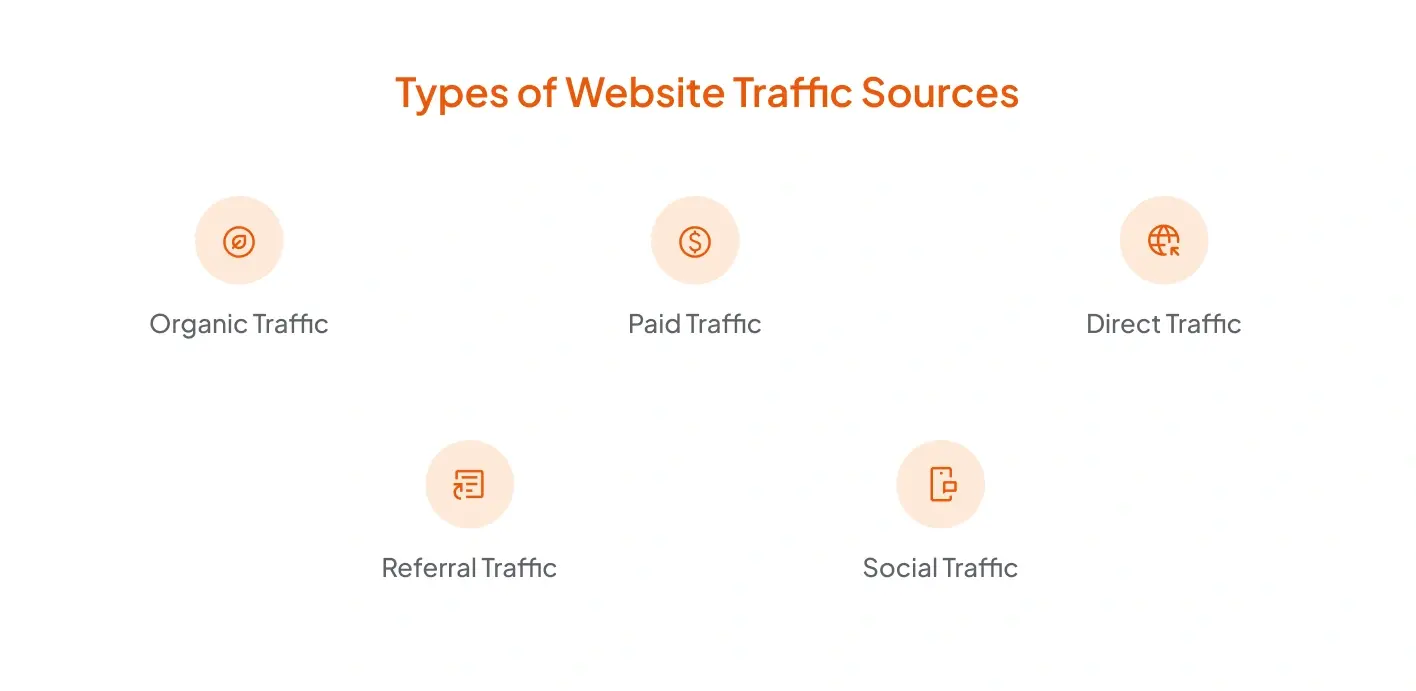
Understanding the primary traffic sources helps you see how people discover your website and which channels truly support your marketing goals. Each traffic source reflects a different audience mindset, level of intent, and stage in the customer journey.
1. Organic Traffic
Organic traffic includes visitors who find your website through unpaid search results. These users are actively searching for information, products, or services related to your business, which often makes them high-intent visitors. Strong SEO, valuable content, and good search visibility help increase this traffic source over time. Organic traffic also supports long-term, sustainable growth because it does not rely on ad spend.
2. Paid Traffic
Paid traffic comes from advertisements on search engines, social media platforms, or display networks. This traffic source allows businesses to drive immediate website visits, target specific audiences, and scale results quickly. While effective for short-term goals, paid traffic requires continuous optimization and investment.
3. Direct Traffic
Direct traffic refers to visitors who reach your website by typing your URL directly, using bookmarks, or accessing offline links. High direct traffic on a website often indicates strong brand recognition and repeat visitors who intentionally return to your site.
4. Referral Traffic
Referral traffic comes from users clicking links on other websites, such as blogs, partner platforms, or directories. This traffic source is valuable because it often attracts qualified visitors and helps build credibility, while also supporting SEO performance.
5. Social Traffic
Social traffic refers to website visits generated from platforms such as LinkedIn, Instagram, Facebook, YouTube, Pinterest, or X. Social media helps increase visibility and reach for content. However, visitor intent may vary depending on the platform and the type of content.
Together, these traffic sources provide a complete view of how users discover your website and which channels contribute most to business growth.
Why Website Traffic Sources Matter for Your Business
Website traffic sources do more than show where visitors come from. They help you understand user behavior, evaluate marketing performance, and make informed business decisions. When you know which channels bring the right audience, you can focus your efforts on what actually delivers results.
Traffic source data helps you identify high-performing channels and eliminate guesswork from your strategy. Instead of spreading budgets across multiple platforms, you can invest more in the sources that drive engagement and conversions. This leads to better resource allocation and more substantial return on investment.
Understanding traffic sources also improves targeting and content planning. Different channels attract users at various stages of the buying journey. By understanding where your audience comes from, you can create content and campaigns that align with their intent and expectations.
Finally, tracking traffic sources supports long-term growth. It helps you spot trends early, adapt to changes in customer behavior, and reduce dependency on a single channel. A balanced traffic mix makes your business more resilient and better equipped to handle market shifts.

How to Track and Analyze Website Traffic Sources
Tracking and analyzing traffic sources helps you understand where your visitors come from and how each channel contributes to your business goals. With the right tools and metrics, you can turn traffic data into actionable insights.
For example, tools like GAfix.ai offer important checkpoints, including the “Traffic Source Effectiveness Checkpoint”, to help teams quickly evaluate which traffic sources drive meaningful engagement and conversions.
Key ways to track and analyze traffic sources:
- Use analytics tools like Google Analytics 4 to monitor traffic by channel.
- Review source-level metrics, including sessions, engagement, and conversions.
- Focus on traffic quality, not just visitor volume.
- Compare performance trends over time to spot growth or decline.
- Apply UTM parameters to accurately track campaigns.
- Keep channel groupings and reports clean to avoid data gaps.
Consistent tracking and analysis help you identify what works, optimize your marketing efforts, and make data-driven decisions that support long-term growth.
Tips to Improve Your Website Traffic Sources
Improving website traffic is not about relying on a single channel. A balanced approach across multiple traffic sources helps you attract the right audience, increase engagement, and drive sustainable growth.
Practical ways to improve your traffic sources:
- Strengthen SEO to increase organic visibility and attract high-intent users.
- Optimize paid campaigns by refining targeting, messaging, and landing pages to enhance their effectiveness and performance.
- Build referral traffic through strategic partnerships, high-quality backlinks, and industry-specific listings.
- Consistently utilize social media to expand reach and increase content discovery.
- Improve email campaigns with personalization and clear calls to action.
- Focus on brand awareness to grow direct traffic over time.
By strategically improving each traffic source, you create a stronger and more reliable traffic mix that supports both short-term results and long-term business growth.
Conclusion
Understanding website traffic sources provides a clearer picture of how users discover your business and which channels drive genuine value. By tracking performance, analyzing user behavior, and strategically improving each source, you can make more informed marketing decisions and build a more balanced, sustainable growth strategy.
Frequently Asked Questions
Q1. What are website traffic sources?

Website traffic sources indicate how visitors arrive on your site, including through search engines, ads, social media, email, or direct visits.
Q2. Which traffic source is most valuable for businesses?
The most valuable traffic source depends on your goals, but organic search often delivers high-intent users and long-term growth.
Q3. How often should businesses review traffic source data?
Traffic source data should be reviewed regularly, ideally on a monthly basis, to track performance, identify trends, and optimize marketing efforts.
Confident Decisions Start with Accurate Tracking
Ensure your GA4 and GTM are correctly configured, reliable, and ready for scale.


Subscribe To Our Newsletter


